

Places and Experiences
Day 1 — Old Town and Royal History

Begin your journey in one of Warsaw’s most recognizable public squares. The striking Sigismund’s Column stands at its center, commemorating King Sigismund III Vasa, who moved Poland’s capital from Kraków to Warsaw in 1596. The square offers an excellent introduction to the Old Town, with colorful historic façades, the Royal Castle, and views toward the city’s reconstructed streets.
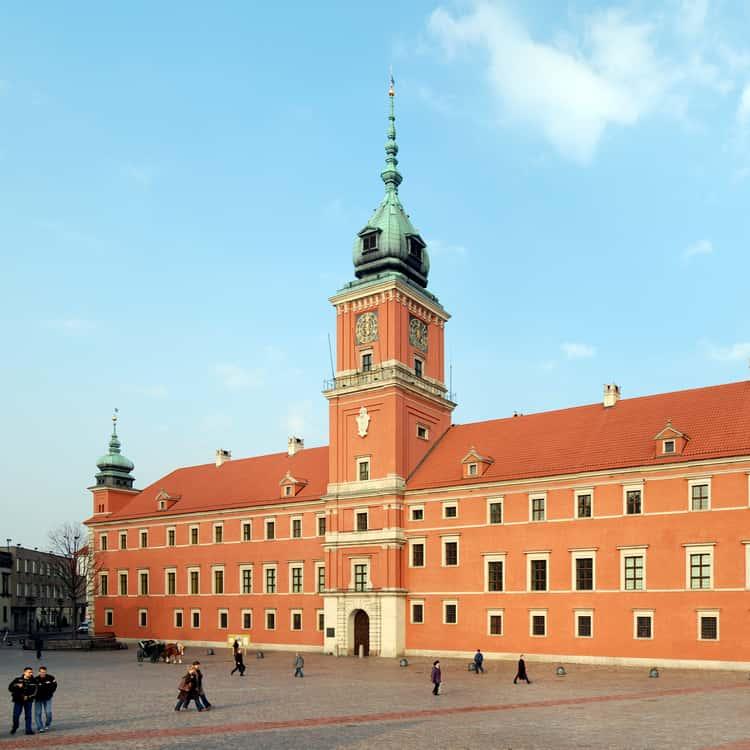
The Royal Castle was a principal residence of Polish monarchs and an important center of government. Its stately architecture recalls the period when Warsaw became the political heart of the Polish-Lithuanian Commonwealth. The castle was severely damaged during World War II and later reconstructed. Today, its historic rooms, artworks, and ceremonial interiors offer insight into Poland’s royal heritage.
 1 / 2
1 / 2Continue into the narrow streets to reach St. John’s Archcathedral, one of Warsaw’s most historically significant churches. Its Gothic-inspired brick exterior stands apart from the colorful façades nearby. The cathedral has witnessed important religious and national events throughout Poland’s history. Like much of the Old Town, it was extensively rebuilt after wartime destruction.
 1 / 2
1 / 2This picturesque square is the social heart of Warsaw’s Old Town. Its colorful townhouses, outdoor cafés, and central Mermaid of Warsaw statue create one of the city’s most memorable scenes. The mermaid, known as Syrenka, is a symbol of Warsaw. Local legend connects the city’s origins with the story of Wars and Sawa, while the mermaid has become an enduring emblem of the capital.
 1 / 2
1 / 2Walk north toward the Warsaw Barbican, an imposing brick fortification that once formed part of the city’s defensive walls. Its curved structure and historic brickwork provide a glimpse into Warsaw’s medieval defenses. The surrounding passages connect the Old Town with the New Town and make an excellent setting for photographs.
 1 / 2
1 / 2Located near Castle Square, St. Anne’s Church is known for its richly decorated Baroque interior and historic architecture. The church’s bell tower is a popular viewpoint for panoramic views over the Old Town, the Royal Castle, and the Vistula River area when visitor access is available.
Day 2 — Monuments and Royal Routes
 1 / 2
1 / 2This powerful monument commemorates the Warsaw Uprising of 1944, when Polish resistance fighters rose against Nazi German occupation. The dramatic sculptures honor the courage and sacrifice of those who fought, as well as the civilians who endured the uprising’s devastating consequences. The monument provides essential historical context for understanding why so much of Warsaw had to be rebuilt.
 1 / 2
1 / 2Admire the elegant Baroque architecture of Krasiński Palace, an impressive historic residence associated with Poland’s aristocratic and cultural heritage. Its symmetrical façade and landscaped surroundings offer a different atmosphere from the dense medieval streets of the Old Town. The palace and its gardens are also a reminder of Warsaw’s longstanding architectural sophistication.
 1 / 2
1 / 2Continue along Krakowskie Przedmieście to see the Presidential Palace, an imposing residence that serves as the official seat of Poland’s president. The building has played different roles over the centuries, reflecting the country’s changing political history. Its grand exterior and ceremonial surroundings make it a notable landmark along Warsaw’s principal historic avenue.
 1 / 2
1 / 2Finish your walk along the Royal Route, a historic network of streets connecting Warsaw’s royal and aristocratic landmarks. Krakowskie Przedmieście is lined with elegant buildings, churches, monuments, cafés, and cultural institutions. The route continues farther south toward Łazienki Park and Wilanów Palace, making it an excellent starting point for exploring more of Warsaw.